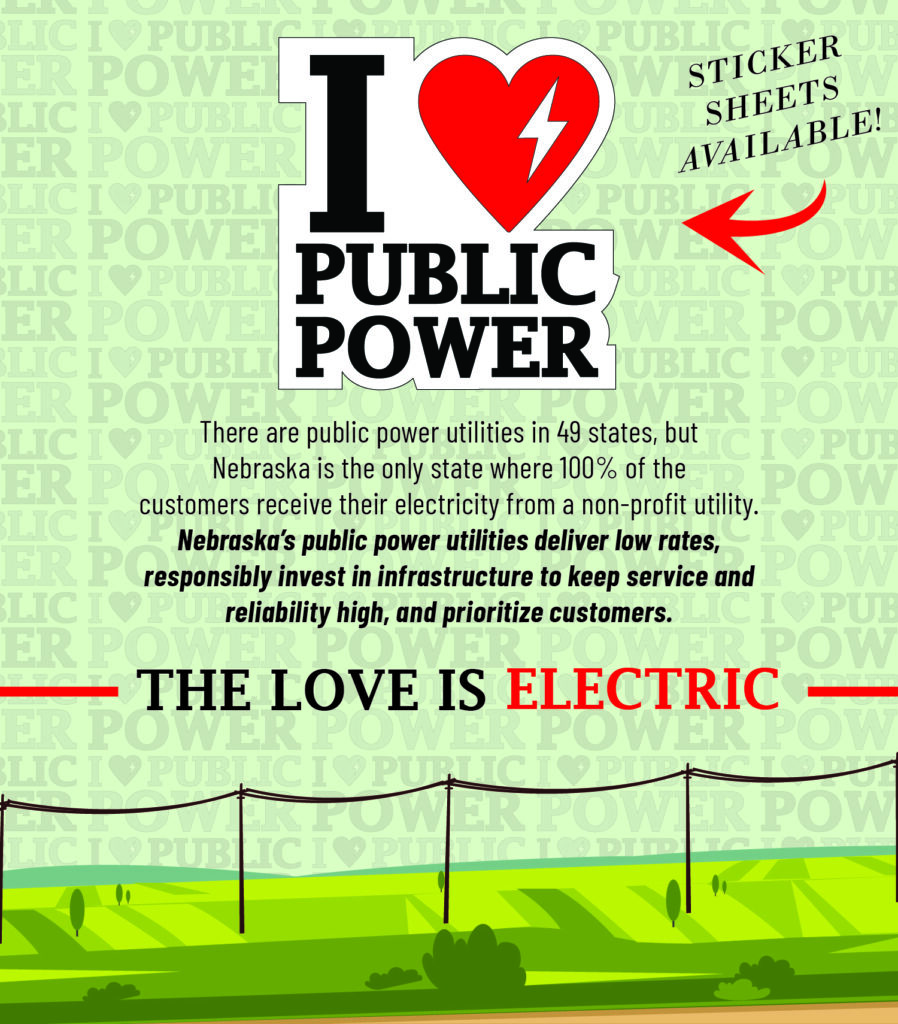
October is PUBLIC POWER MONTH
When you flip a switch, you expect the light to turn on; however, it does more than just light a room. It powers the dreams of a teenager studying for a test, the community gathering to support one another, and the critical processes that keep the local economy running. This is the heart of public power and the energy that continues to fuel Nebraska.
Yet, this seamless access to electricity was once a distant reality for many Nebraskans. During the early 20th century, many rural areas of Nebraska lacked access to electricity from private utilities, prompting the state to establish a public power system to serve all communities. In the 1930s, the Nebraska legislature passed legislation allowing the creation of public power districts, such as SCPPD, to bring electric service to rural areas not served by private utilities. Public power districts deliver more than electricity; they add significant value to the quality of life within the communities they serve. Now, Nebraska is the only state in the country with a fully public power system.
This Public Power Month, we celebrate the importance of public power and the value of keeping it local. From the lights in our homes to the critical infrastructure that drives our local economy, public power is a steady, reliable source for our communities. Thank you for trusting us to power what matters most to you.